
#006. The Key Shift Most Women Miss With Food After 45
Hey there, it’s Becky
For a long time, food was simple for me.
As an endurance athlete, it had a clear job. You ate to train. You ate to recover. You ate to race. There was very little emotional noise around it. Food supported the work, and the work was clearly defined.
What I did not realise at the time was how much that structure protected everything.
Because when the structure changes, food often changes with it.
The quiet shift no one warns you about
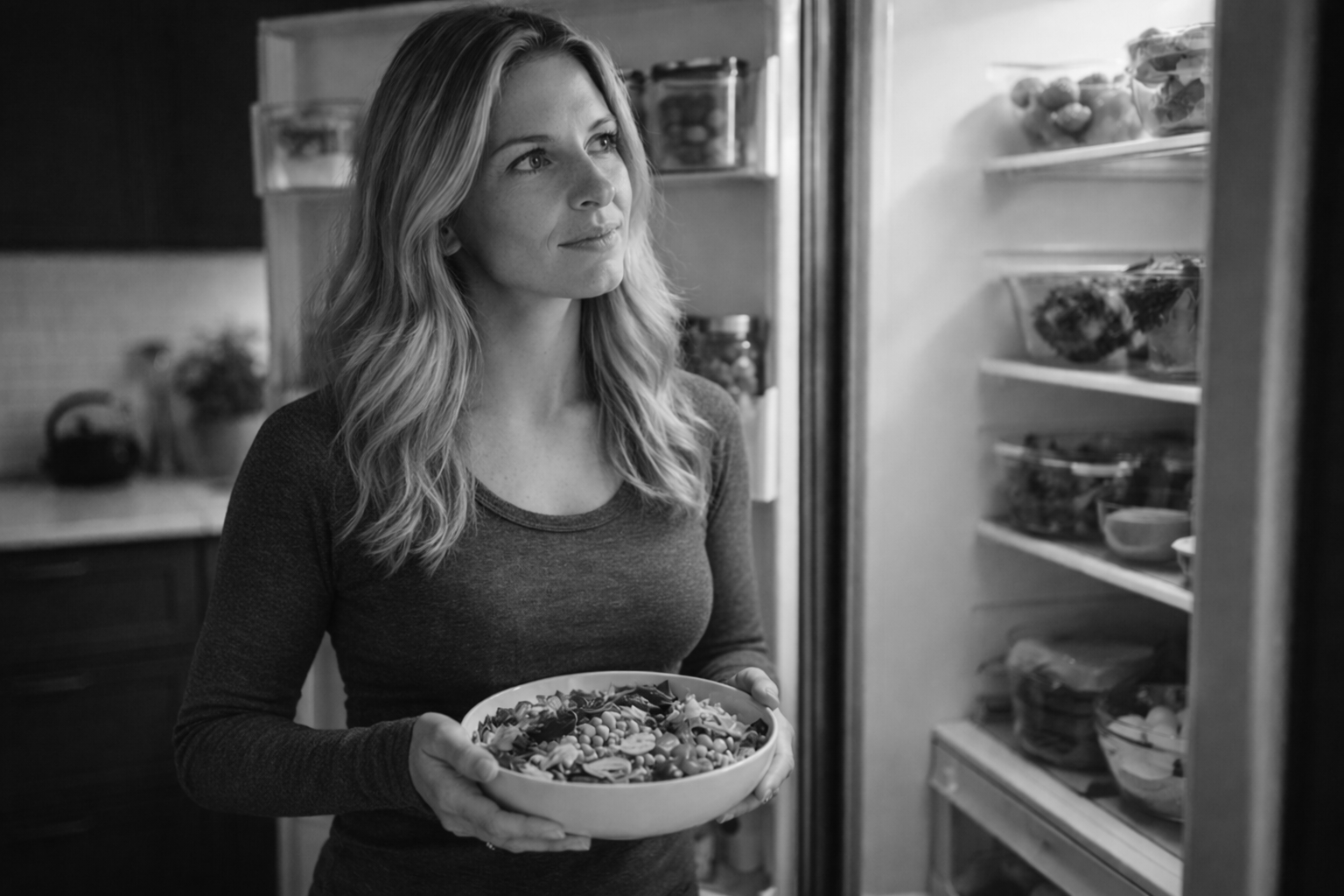
Later in life, often without a clear turning point, food can stop being fuel and start becoming a negotiation.
You may recognise the signs. Standing in the kitchen, unsure what you actually want. Eating what seems like the right thing, but not feeling satisfied. Oscillating between being strict and then giving up. Feeling oddly tired after meals. Thinking about food far more than you would like.
Nothing dramatic has happened. You are not doing anything obviously wrong. But the relationship with food has shifted.
And that shift is rarely about the food itself.
When structure disappears, decisions multiply
During my racing years, most food decisions were already made.
Training dictated timing. Recovery dictated composition. Performance dictated consistency. There were guardrails, and they removed friction.
Later, as training became less rigid and life became fuller, those guardrails softened.
What replaced them was not freedom. It was decision fatigue.
Every meal became a small internal question. Should I eat this? Is this too much? Is this right for me now? Will I regret this later?
That is when food stops being supportive and starts demanding attention.
Negotiation is a sign of instability, not weakness
This is important to say clearly.
When food becomes a negotiation, it is not because you lack discipline. It is usually because your eating pattern has lost its base. You may be trying to reconcile competing rules. Your needs may have changed, but your framework has not. Or life may simply be asking more of you than before.
Negotiation is what happens when stability is missing.
And stability does not come from tighter control. It comes from better defaults.
The athlete lesson that came back around
One of the biggest lessons sport taught me, which only made sense later, was this: the less you debate food, the better it works.
As an athlete, I did not stand around negotiating meals. I had a pattern, a rhythm, and a base I returned to.
That base did not eliminate choice. It reduced friction.
And that is exactly what many women need again after 45.
From control to support
At this stage of life, food plays a broader role. It supports strength training, recovery between sessions, cognitive clarity, stable energy, and emotional steadiness.
If food is creating tension, it is no longer doing its job.
That is why the shift from control to support matters so much.
How negotiation begins to fade
When you establish a stable nutritional base, something interesting happens. You stop asking, “What should I eat?” or “Is this allowed?” or “Am I being good today?”
Instead, the questions become more practical. What supports me right now? What will help me feel steady this afternoon? What will make training tomorrow easier?
Those questions do not feel heavy. They feel useful.
Negotiation fades because the system holds.
Real life still counts
This does not mean every meal is ideal.
Some days are rushed. Some meals are eaten out. Some choices are about convenience rather than perfection. That is part of real life.
A takeaway salad eaten calmly can still support you more than a perfect home-cooked meal that never happens, or is eaten in a rush and with stress.
Support beats perfection every time.
When food becomes quiet again
The goal is not to think about food constantly. The goal is for food to become quiet again.
Quiet enough that it supports your training, fuels your day, and does not drain mental energy. Quiet enough that it does not carry guilt or constant scrutiny.
That is not indifference. That is integration.
The takeaway
When food starts to feel like a negotiation, it is not a cue to tighten the rules. It is a cue to rebuild stability.
Food works best when it supports your life quietly, without debate, guilt, or constant thought.
When nourishment becomes support instead of scrutiny, energy returns. Clarity returns. And vitality has room to grow.
That is not about eating perfectly.
It is about eating in a way that finally works for you, now..
If you enjoyed this letter and have any questions, hit reply and let me know!
Until next week…
Becky.
Momentum wins 🙂
You Might Also Like These: